
Priced Out of a Single-Family Home? Don’t Overlook Condos and Townhomes
Market Updates Nike John September 16, 2026
Market Updates Nike John September 16, 2026
I hear some version of this from buyers all the time: “I can afford the monthly payment I’m comfortable with, but I can’t find a house I actually want in that price range.”
That’s a real problem, especially for first-time buyers. But sometimes the issue isn’t that there are no homes within budget. It’s that the search is too narrow.
If you’ve been looking exclusively at detached single-family homes, it may be worth adding condos and townhomes to the conversation.
Not because you should settle for something you don’t want. But because changing the property type can change the math—and potentially give you more choices.
Nationally, buyers have considerably more attached-home inventory to choose from than they did a few years ago.
According to HousingWire Data, there were 233,030 condos and townhomes for sale in June. That was more than double the inventory available in June 2022 and the highest June level in at least a decade.
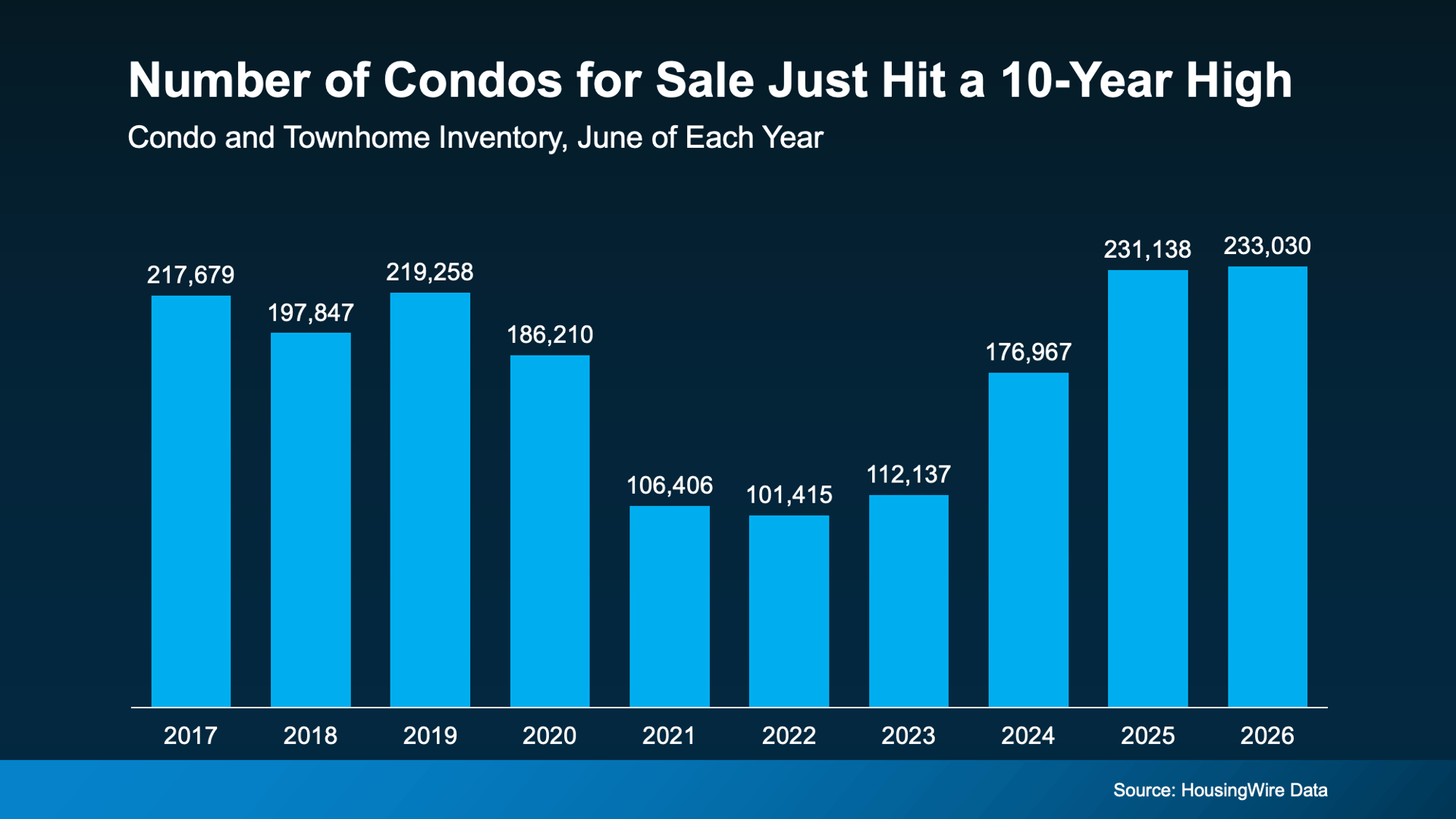
That’s meaningful because inventory affects more than how many listings appear in your search.
When buyers have more choices, they may have more time to evaluate a property rather than feeling pressured to make an immediate decision. Depending on the specific market and property, increased inventory can also create more opportunity to negotiate on price, closing terms, or other parts of an offer.
But there’s an important caveat: that’s national data.
The Greater Boston market doesn’t move as one big market, and condo inventory can look very different depending on the town, neighborhood, price point, and even the type of condo you’re considering.
A two-bedroom condo in Boston, a townhouse in Dedham, and a detached single-family home in Needham are three very different searches.
The national headline is only part of the story.
The other reason condos deserve a look is straightforward: they typically cost less than detached single-family homes.
According to the National Association of Realtors, the national median condo price in June was $380,000, compared with $446,400 for a single-family home.
That’s a difference of $66,400.
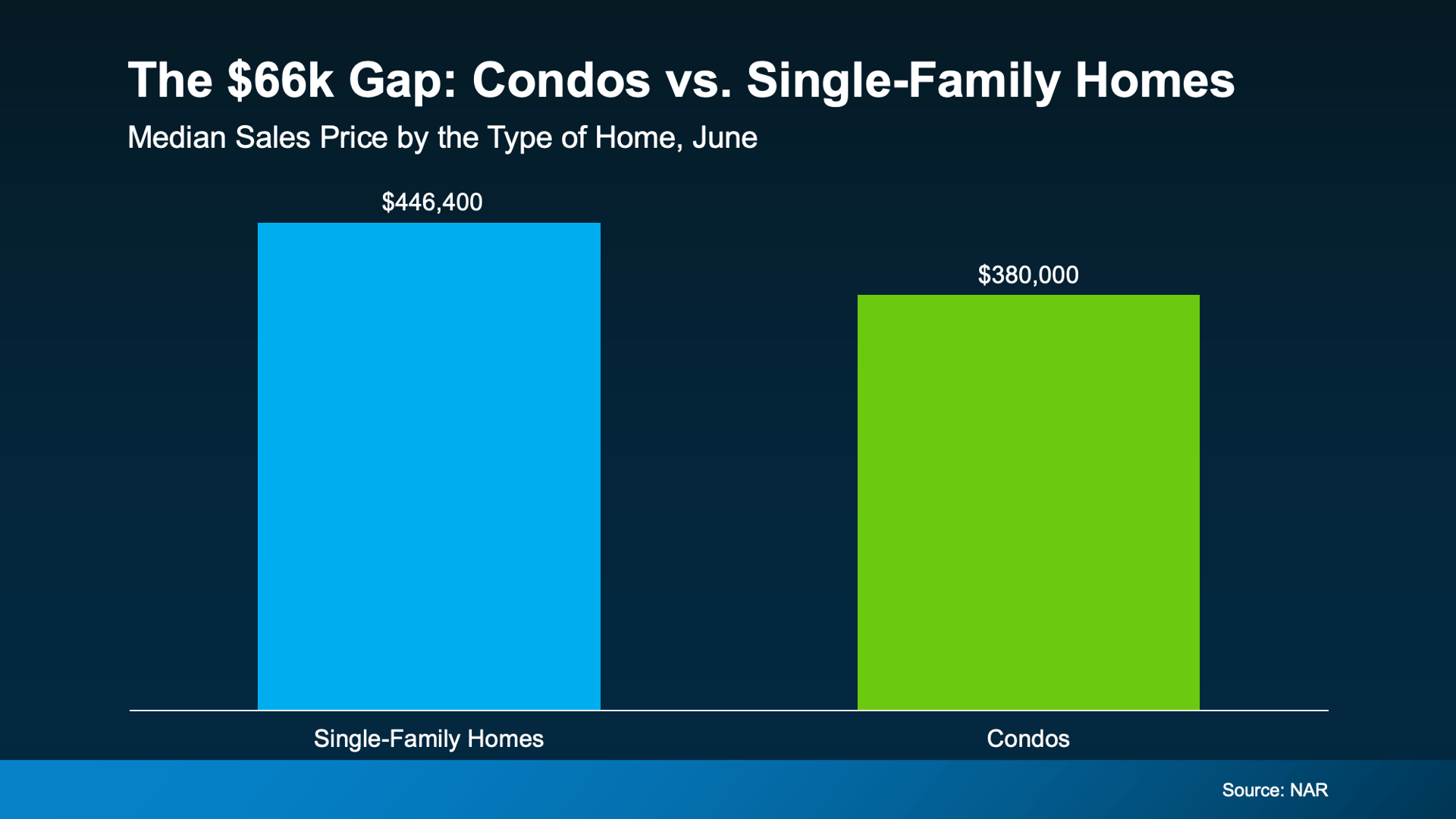
Of course, those national median prices shouldn’t be mistaken for Greater Boston pricing. But the underlying point is useful.
If your budget keeps putting the single-family homes you want just out of reach, changing the property type may open another part of the market.
And that can be particularly important for first-time buyers.
Your first home doesn’t necessarily have to provide every feature you’ll want for the next 20 years. It does need to work for your finances, your plans, and the way you actually want to live now.
This is where I’d add a very large asterisk to the “condos cost less” conversation.
A lower purchase price doesn’t automatically mean a condo is the better financial choice.
Condo fees need to be included in your monthly housing costs. You also need to understand what those fees cover, the financial health of the association, the condition of the building, upcoming capital projects, reserves, insurance, and whether special assessments are planned or likely.
A $600 monthly condo fee might look expensive until you realize it covers expenses you’d otherwise pay separately. On the other hand, a very low condo fee isn’t automatically a bargain if the association hasn’t been adequately funding reserves or maintaining the property.
The better question is: What does this property actually cost to own, and what am I getting for that money?
That requires looking beyond the list price.
These terms can get confusing, particularly because “townhouse” often describes the physical style of a home rather than its legal ownership structure.
With a single-family detached home, you typically own the building and the land. You don’t share walls, and you’re generally responsible for maintaining the entire property.
With a condominium, you own your individual unit along with an interest in the common areas. The condominium association typically handles certain shared responsibilities, but exactly what belongs to the unit owner versus the association depends on the condominium documents.
A townhouse generally describes an attached, often multi-level home. But here’s the important part: a townhouse can sometimes be legally structured as a condominium.
That distinction matters.
Before buying, you want to understand exactly what you own, what you’re responsible for maintaining, what the association controls, and what restrictions apply.
The condition of the unit itself is only one part of the due diligence.
You’ll also want to understand the condo association.
That means reviewing things like the condo documents, budget, reserves, recent meeting minutes, insurance, current or anticipated assessments, owner-occupancy levels where relevant, and any rules or restrictions that could affect how you intend to use the property.
Your lender will have questions about the condominium, too. Financing a condo isn’t always identical to financing a single-family home, so involving your lender early can save some unpleasant surprises later.
In other words, don’t fall in love with the kitchen and forget that you’re also buying into the financial health and governance of the association.
There’s a tendency to think of homeownership as a progression that starts with a detached house, but especially around Greater Boston, that’s not necessarily how it works.
For some buyers, a condo or townhome can provide a more manageable entry price, a location they prefer, or a property that requires less exterior maintenance.
For others, the fees, shared decision-making, or restrictions make a single-family home worth stretching the search geographically or waiting longer.
Neither choice is automatically better.
If you’re struggling to find single-family homes that make sense within your budget, though, I wouldn’t assume you’re priced out until you’ve looked at the whole market available to you.
Sometimes the answer isn’t increasing the budget.
It’s expanding the search.
If you’re trying to figure out what your budget actually buys in Greater Boston, tell me the town and price range you’re considering. We can compare the condo, townhome, and single-family options—and the real monthly costs—side by side.

Compare a sale, a buyout, and a deferred sale before deciding what comes next.

Practical ways to manage the logistics, acknowledge the emotions, and give yourself time to settle in.

Practical support for managing the decisions, costs, and everyday demands of moving with children.
Market Updates
Expanding your search beyond single-family homes may open up more realistic options for buying your first home.

Market Updates
What buyers and homeowners should know about property values, utility costs, and the rise of data center development in Massachusetts.
Builder price cuts and incentives are challenging the old assumption that buying brand-new always means paying more.

Why more inventory, less competition, and motivated sellers could matter more than waiting for the “perfect” mortgage rate.

Market Updates
“Should we wait until things settle down?”

Find the cheapest moving companies in Boston to save on your next apartment move.
Get assistance in determining current property value, crafting a competitive offer, writing and negotiating a contract, and much more. Contact Nike today to discuss all your real estate needs!