Is New Construction Actually Cheaper Than an Existing Home Right Now?
September 14, 2026
September 14, 2026
I hear some version of this from buyers all the time: “We’re not looking at new construction. It’s too expensive.”
That assumption makes sense. Brand-new house, new appliances, new systems, no previous owner—you’d expect to pay a premium for all of that.
But right now, the numbers are telling a more complicated story.
Nationally, new construction has become surprisingly competitive with existing homes. In some cases, the sticker price is lower. And once you factor in the incentives builders are offering, the financial difference can become even more significant.
That doesn’t mean a new home is automatically the better buy. It does mean buyers probably shouldn’t eliminate new construction before doing the math.
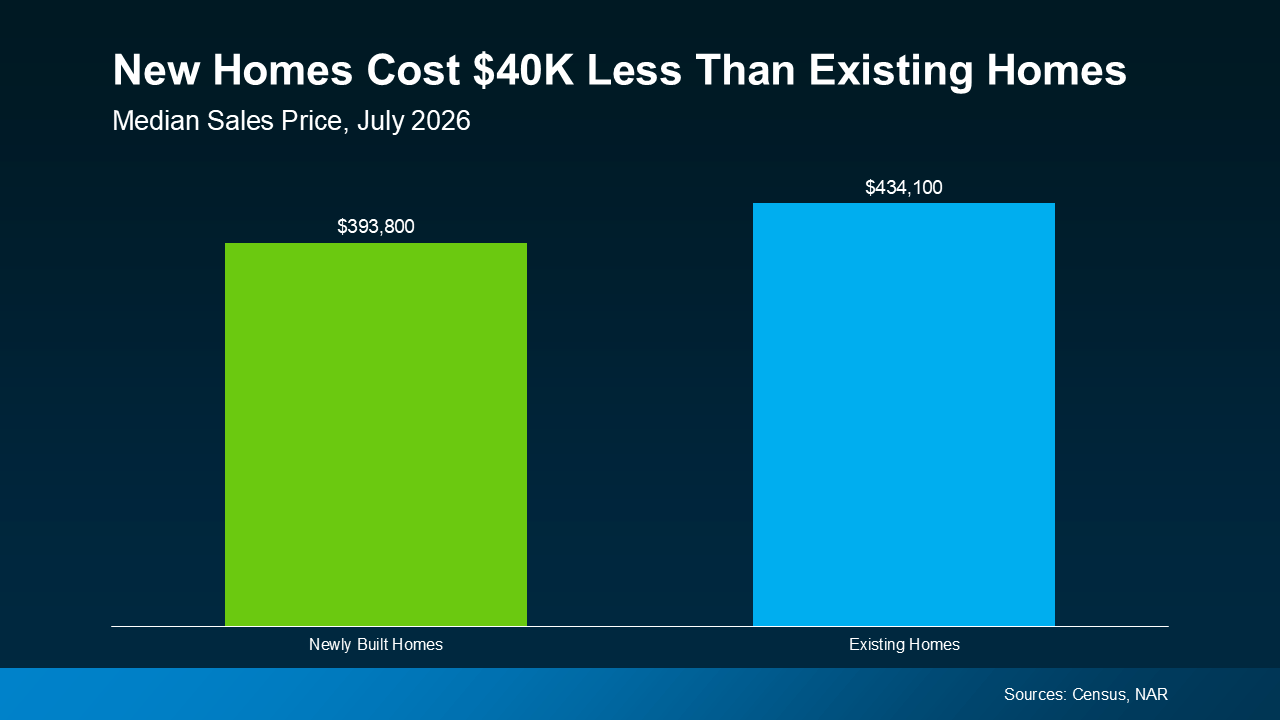
According to the U.S. Census Bureau, the median sales price of a newly built single-family home was $393,800 in July 2026.
For comparison, the National Association of Realtors reported a $429,100 median price for existing homes in August.
Those aren’t perfectly apples-to-apples numbers. They’re from different months, and the types, sizes, and locations of homes being sold in each category aren’t identical. But they illustrate an important shift: new construction is no longer automatically the more expensive option.
That’s worth paying attention to because it challenges one of the most persistent assumptions buyers make when deciding what belongs in their search.
The answer comes down to something fairly simple: inventory costs builders money.
An individual homeowner may decide not to sell if they don’t get the price they want. A builder with completed homes sitting unsold has a different problem. They have capital tied up in those properties, along with carrying costs, and they need to keep inventory moving.
So when buyer demand slows, builders have a few levers they can pull.
According to the National Association of Home Builders’ August 2026 survey, 35% of builders reported cutting prices, with an average reduction of 6%. Even more notable, 63% were using some type of sales incentive.
Those incentives can include closing-cost assistance, upgrades, or mortgage-rate buydowns.
And that last one deserves particular attention.
Buyers naturally focus on the purchase price. I get it. It’s the biggest number on the page.
But when you’re financing a home, the better question is: What is this house actually going to cost me each month—and how much cash do I need to close?
A builder-paid mortgage-rate buydown could potentially make a larger difference to your monthly payment than a modest reduction in the sales price. Closing-cost credits can reduce the amount of cash you need upfront. Included upgrades may save you from paying for improvements shortly after moving in.
In other words, comparing a $700,000 resale with a $700,000 new construction home based solely on price doesn’t tell you enough.
You need to compare the entire package:
That’s where the actual comparison starts.
This is an important distinction.
The national headline is only part of the story.
New construction varies enormously by region, and Greater Boston has its own supply constraints, land costs, zoning considerations, and mix of housing. A national median doesn’t tell you whether a particular new townhouse, condo, or single-family development in eastern Massachusetts is a bargain.
It also doesn’t mean you’ll find builders offering aggressive incentives in every community.
What the national numbers do tell us is that buyers shouldn’t automatically dismiss new construction because they assume it carries a premium.
Around Greater Boston, the smarter approach is to compare the new-construction opportunities that actually exist in your target area and price range against the resale inventory available at the same time.
Sometimes the resale wins easily.
Sometimes the new construction does.
And sometimes the builder incentive changes the equation completely.
There’s another part of buying new construction that buyers sometimes discover a little too late: the builder’s sales representative represents the builder.
That isn’t a criticism. It’s their job.
But it means buyers should understand who is advising whom before they start negotiating price, incentives, upgrades, contingencies, inspections, and contract terms.
Ideally, you want your own representation involved before your first visit or registration with a builder, because builder policies regarding outside buyer representation can vary.
An experienced buyer’s agent can help you compare the development against resale alternatives, evaluate incentives, look at comparable sales, understand which upgrades you’re actually paying for, and negotiate where the builder has flexibility.
And yes, I still recommend buyers consider an independent home inspection.
New doesn’t mean flawless.
This is where I’d add one big asterisk to all of this.
A $20,000 incentive doesn’t make the wrong house the right house.
You still have to evaluate the property itself: location, layout, quality of construction, total monthly cost, future resale, development plans, association documents when applicable, and whether the home actually works for you.
Builder incentives are a financial tool—not a reason to compromise on the fundamentals.
The goal isn’t to “get a deal.”
The goal is to buy the right property on the best terms you reasonably can.
If you’ve been excluding new construction from your home search because you assume it’s more expensive, it may be time to revisit that assumption.
Nationally, new-home prices have become much more competitive with existing homes, and a significant share of builders are using price reductions and incentives to attract buyers.
That doesn’t mean new construction will be cheaper everywhere—especially in a market like Greater Boston.
But it does mean it’s worth comparing.
If you’re considering a new development in eastern Massachusetts, send me the community or property you’re looking at. I can help you compare the builder’s offer with the resale options nearby and figure out what the numbers actually look like—not just what the incentive sheet says.
Compare a sale, a buyout, and a deferred sale before deciding what comes next.
Practical ways to manage the logistics, acknowledge the emotions, and give yourself time to settle in.
Practical support for managing the decisions, costs, and everyday demands of moving with children.

Market Updates
Expanding your search beyond single-family homes may open up more realistic options for buying your first home.
Market Updates
What buyers and homeowners should know about property values, utility costs, and the rise of data center development in Massachusetts.
Builder price cuts and incentives are challenging the old assumption that buying brand-new always means paying more.

Why more inventory, less competition, and motivated sellers could matter more than waiting for the “perfect” mortgage rate.

Market Updates
“Should we wait until things settle down?”
Find the cheapest moving companies in Boston to save on your next apartment move.
Get assistance in determining current property value, crafting a competitive offer, writing and negotiating a contract, and much more. Contact Nike today to discuss all your real estate needs!